
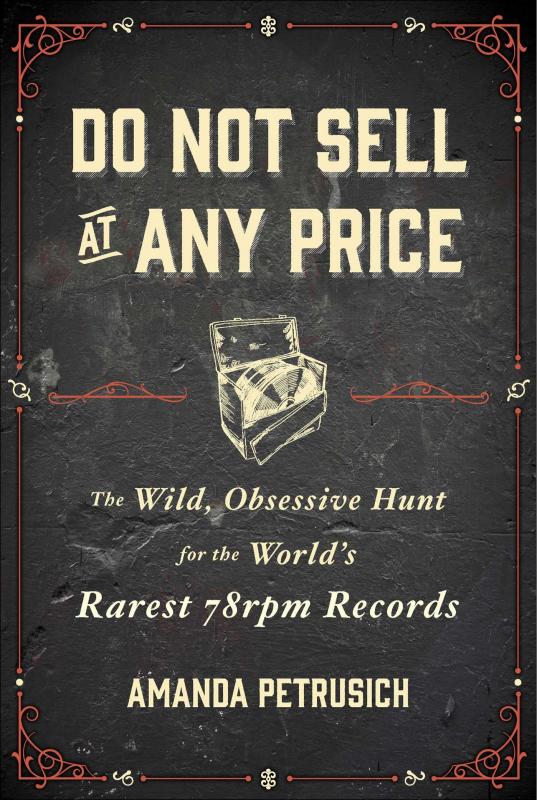
It’s another helping of leftovers! This one’s from 2014 and was not long after my dad finally died of Alzheimers. I remember this book being one of the first things I truly enjoyed after all that crap ended far too slowly.
I doubt there’s much of an audience for books like this. Books themselves barely exist anymore, with fewer than ever reading anything not on a screen. I like having digital copies myself so I get it. What I don’t get is people that don’t read for fun, that see it as work, and hard work at that! We’ll need to prioritize education, maybe pay teachers what they deserve, before things can start to improve. It may already be too late.
Anyway, on that cheery note, here’s what I wrote back then. I was only 54!!!
Hiya! Here we are again, this time alight on the wings of enthusiasm. No longer whining about the cruelties of the past! Not that that won’t reappear from time to time, mind you. It’s just that I’ve stumbled upon something recently that’s made me happy again. Giddy even. Fuckin’ A!
It’s a book (titled as this post), of surprisingly recent vintage, about record collecting and the odd humans that do it. 78’s specifically. The source of many things musically epiphanic for dolts like me that ravenously savor certain periods of American cultural history.
It’s a really good book. Who am I kidding? That doesn’t even come close to covering it. It’s a book so insanely great that even those with little or no interest in its subject matter would probably enjoy it.
First off, it’s unbelievably hilarious. The author (Amanda Petrusich) writes spectacularly well, which is great (and rare) enough, but her most endearing quality is her ability to toss off sentences that make me laugh out loud. Like:
Changing into a wet suit on the side of a busy road in a residential community in suburban Wisconsin is a uniquely humiliating experience.
Or:
I squirted more ketchup packets onto a cardboard boat of tater tots, which I’d strategically positioned on the dashboard for continued ease of access.
Or:
When the timbre shifted from jovial to menacing, I darted back to my room, piled all the unbolted furniture in front of the door, unwrapped a plastic cup, poured myself a drink (neat), and fell asleep horizontally with all of my clothes still on.
But humor takes a back seat ultimately, and lofty, literate sentences like this spill into the reader’s brain like hooch from an ancient bluesman’s bagged bottle:
There is a moment in late August, in the South, where the landscape gets nearly obscene—overfed and cognizant of what comes next—and unleashes a final, boasting parade of virility.
Still:
When a portly man sporting strained cargo shorts and an orange GUNS SAVE LIVES sticker unleashed an epic, undulating belch a couple inches from my face—we were both digging, somewhat frantically, through a mound of state-shaped refrigerator magnets—I found myself not only not repulsed, but almost wanting to shake his hand.
Etc. Maybe not sidesplitting when read out of context, but believe you me, this gal is funny. Or she’ll casually fold in a bit of profanity, a “shittier” or even a “fuck” here and there, lightening the potentially academician tone. With this subject matter? It works like a charm. You feel like you get to know this author more than most that write about things like this.
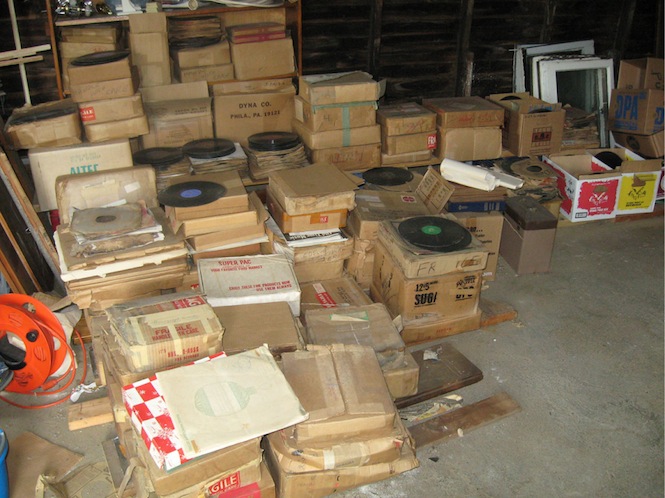
And the subject matter itself is fascinating, whether you give a crap about old records or not. Basically, she meets and greets and otherwise gets to know (becomes?) several of these weird, almost exclusively male, generally older 78 record collector folks, attempts to make sense of what they do and what happens to ‘em and their beloved collections as they age and die.
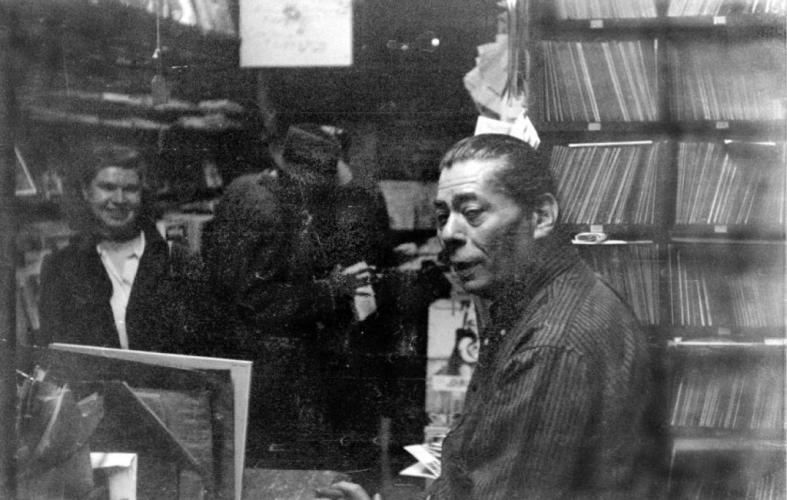
Sounds dry and dusty? It ain’t, not for me anyway. There’s a whole chapter depicting the clientele and atmosphere of a long-gone New York City record store. Shifty-eyed obsessives in trench coats and fedoras, with deep knowledge of hot jazz or maybe blues or old-time music, swigging from fifths of bourbon as they wait for Saturday, 3pm, when Bob always shows up with his suitcase full of pornographic novels. A few minutes later it’s back to pawing through the stacks or arguing with someone about the relative merits of Bunk Johnson vs. Miff Mole.
If even that degree of colorful dustiness is too much to bear, there’s the chapter in which the author, an admitted claustrophobic city-dweller with no predilection for thrill-seeking whatsoever, learns to scuba dive, expensively. Spends thousands on the materials and classes and gear and all the rest, complaining and worrying all the way.
All for what? So she can dive into a Wisconsin river that might, just might, contain some old 78’s that employees of the Wisconsin Chair Company (AKA Paramount records – perhaps the single most important label in US history, known for using mud, ground up chairs, even animal bones in their low-quality “shellac”) used as Frisbees back in the 1920’s. She wants to pan for musical gold, and does, even though it turns out that the river is no more than five feet deep at any point. Some of the funniest stuff is in this chapter…
Of course, it’s more than just portrayals of ancient wack-job collectors and the author’s lamentable shenanigans. There’s a fair amount of time spent describing the majesty of the music itself, of the experience of placing one of these often one or two-known-to-exist gems on a turntable, setting it to the optimum speed (sometimes higher or lower than 78rpm), with just the right size ice cream spoon on top of the stylus. Getting the music first hand as opposed to it being filtered through several layers of digital splintering and reassembly, with stops in Estonia along the way.
There are also chapters on people like Harry Smith, who invented the album with his 1952 folk music anthology. Strange strange guy, but prophetic. Lots of detective work on the author’s part too, trying to track down items from Smith’s actual collection (from which the album was assembled).
One of the tenets of the book is that this collection could be anywhere or nowhere, despite some of it, maybe, having been donated to the proper authorities. She waits at the NYPL for like 45 minutes while some librarian down in the tombs presumably riffles through poorly cataloged shelves of god-knows-what, then gives up. Only with the help of one of the more normal present-day collectors is she able to determine that one item is the same record Smith used back in 1952.
It’s the story of what happens to all the rest that’s the subtext here. No matter what, much of this irreplaceable, one of a kind stuff, ends up in dumpsters. Best case scenario is that some library or the Smithsonian puts it into its own vast collection, where it may never be seen or heard again. With every passing day, we lose another load of something that will never be heard again.
Time is also spent attempting to understand the collecting fetish itself. Scientists are consulted, research is done. Turns out that maybe some degree of autism is involved, and that males are genetically predisposed to fall into the clutches of collecting things obsessively. It goes beyond the mere collecting though. It’s mostly about the assigning value to and somehow ordering and making sense of the objects of desire. Becoming an expert in one’s narrow field of interest gives one something resembling control, maybe even fame of a sort.
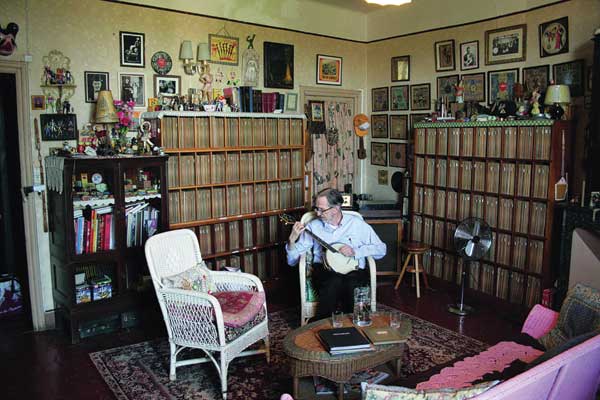
Deep down though, it’s about strange people doing strange yet culturally valuable things, trying to (in most cases) preserve what they see as a valuable and soon to be (more) lost portion of musical history. Once these 78’s disappear into landfills or get shattered by clumsy handlers, that piece of art may well be gone for good.
And though it’s true that most of the old crap is just that – crap – there are also gigantic veins of music even now just beginning to be explored. Albanian folk music of the 20’s and 30’s? African music of slightly later vintage, played on saxophones and so alluring that one piece made the Billboard charts? Uh huh. And that’s just scratching the surface. Or maybe not. Nobody really knows until they unearth a batch of weirdness and start listening, and how many crazy folks are there anymore that can or will do that?
I dunno… I just found this book to be the best thing I’ve read in years, a welcome respite from the dozens of Beatles books and similar things I’ve been ingesting like so many Junior Mints. I think the last such tome I’d read was John Lennon’s dad’s 35-years younger widow’s tale, which was actually pretty compelling. That tells you how vapid so much of the writing on music can be.
So. Maybe you’ll be tempted to seek out this book, but probably not. I’m betting that many of you would enjoy it, but priorities are priorities after all. If you’re extra-curious though, shoot me an email and I can hook you up. Thanks for reading anyway!
I’ll foist one tune here, a bizarre one from Africa (Zimbabwe to be precise), circa 1947 despite what it says in the title, predating the Anglicized and lame “Wimoweh“ by a few years. It’s just a fun record of which I’d previously been ignorant, and one that gets a lot of attention in the book:


Leave a Reply