
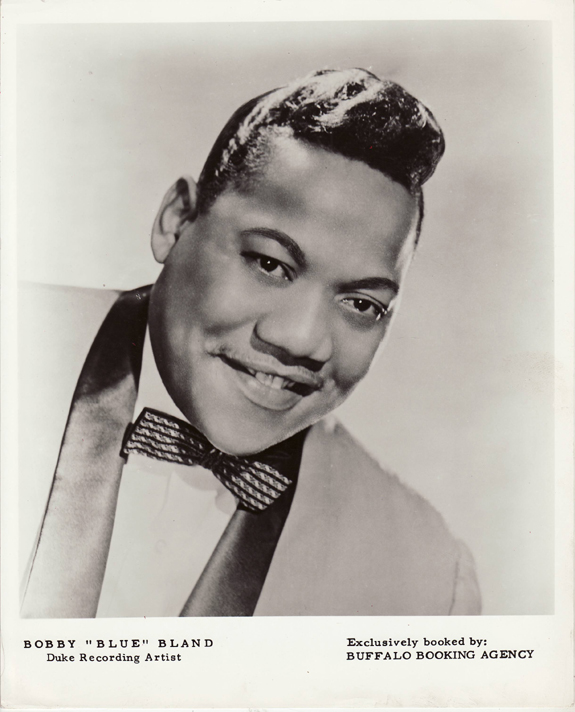
Bobby “Blue” Bland. A name that people of a certain degree of seasoning (and of a brownish hue) may well recognize, but someone whose music has fallen between the cracks, unheard or unknown by many fair-complected Americans. Today we’ll delve into this unduly ignored by the general populace singer and the record label that he made famous and profitable.
Robert Brooks was born in rural Tennessee to a cotton farm-dependent, broken family. Raised mainly by his mother and eventually taking his stepfather’s last name, Bobby’s mom moved what was left of the immediate family to the big city (Memphis), wisely realizing the lack of opportunity in their situation. Before long young Bobby, who dropped out of what little schooling he’d had by age 10 and was illiterate evermore, began finding his path, singing in church to immediate acclaim.
His future was set in stone, especially when Bland began running with some fellas of like age and mind on and around the famed Beale Street. It’s amazing in retrospect how many of this young group of musically inclined yet unschooled friends went on to musical fame, if not fortune. B.B. King, Rosco Gordon, Junior Parker and Johnny Ace, among others, became known as the Beale Streeters, all jumping on any available stage and developing a following with their fellow countrified city-dwellers.
It was King that first found success, with a radio show on Memphis’s WDIA, the first station ever to switch to all-black DJ’s and music programming. Before long the station grew to be a 50,000 watt flamethrower, heard throughout the south and into the midwest, on clear nights into most of the contiguous USA, sowing the seeds of the R&B-into-rock and roll revolution.
The Beale Streeters, buoyed by King’s success (1949’s “Miss Martha Brown” did not chart but was enough to win King tour dates from coast to coast), were soon in the recording studio themselves, often involving Sam Phillips of soon to be Sun Records and Elvis fame. Ike Turner plays into all this as well, but we’ll try to keep things in focus.
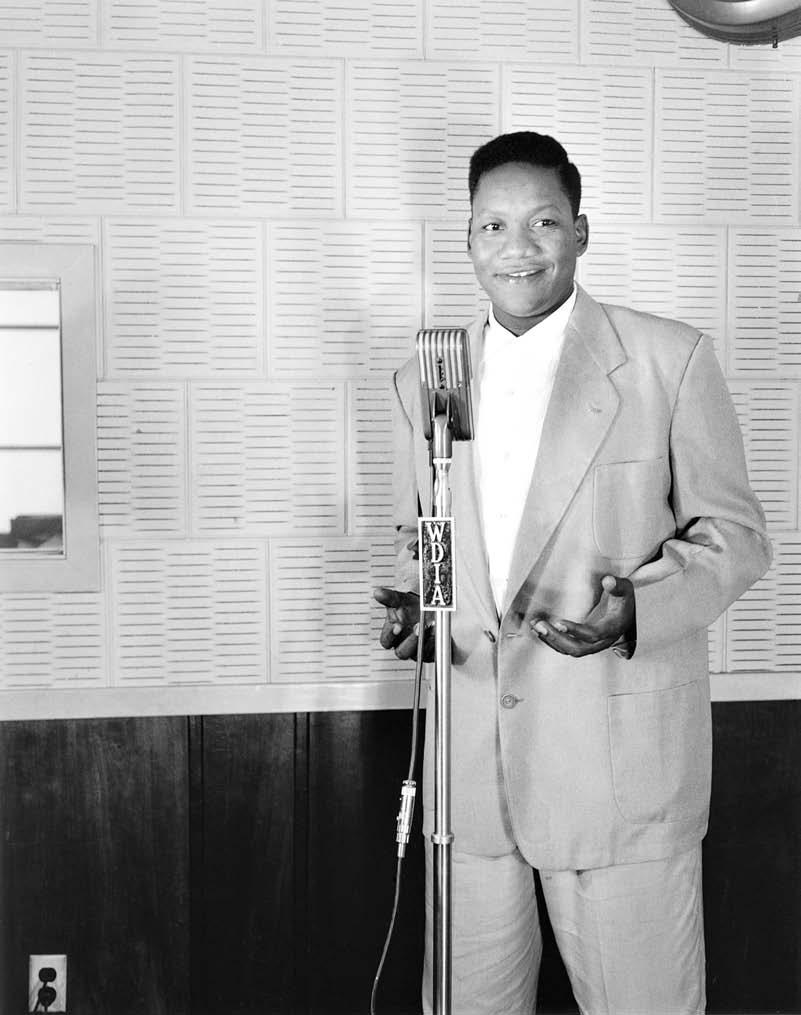
1950, still in Memphis.
Bobby Bland recorded his first sides in 1950, at age 20, in Phillips’ studio. They did not sell. In fact, it would be several more years, including a stint in the Army, before Bland would find any success as a recording artist or gain a following as a touring act. Meanwhile, he honed his craft and bided his time, doing valet and driver work for his fellow Beale Streeters, Junior Parker especially. Despite illiteracy, Bland could always fall back on driving as a means of self-support, having obtained a license (somehow) at a relatively young age.
Even after Bland’s first big hit, 1957’s R&B chart-topper “Farther Up the Road” (Eric Clapton would change this title to “Further On Up The Road” later on, and rarely credit Bland, as he was not a guitar player), he continued touring in partnership with Parker, still driving and setting up the PA and lots of other menial chores. Not until the early 1960’s would he finally become a star big enough to end this humiliating (yet still friendly) arrangement.
But we’re getting ahead of the story here. In late 1952, Bland had signed with the (temporarily) Memphis-based Duke label. Duke was at first a small operation, soon to be run by the driven and avaricious Houston, Texas black entrepreneur Don Robey. Early in the game, however, Robey was smart enough to hire one Evelyn Johnson, who not only took care of many of the Duke business details but also started the soon to be huge Buffalo Booking Agency. Johnson was the secret sauce that made all the Beale Streeters, and eventually dozens, hundreds of other black acts of mostly southern origin major touring attractions.
Evelyn Johnson was really a fascinating behind the scenes player, and had more than a cameo role in the story of how R&B coalesced into first rock and roll and then into what was eventually called soul music. She developed contacts with every club, theater, juke joint or any other venue throughout the black entertainment world, kept the artists happy and even somewhat profitable as they bused the back roads of the Jim Crow south, kept the books, paid the artists, and most importantly insured that the show went on no matter what.
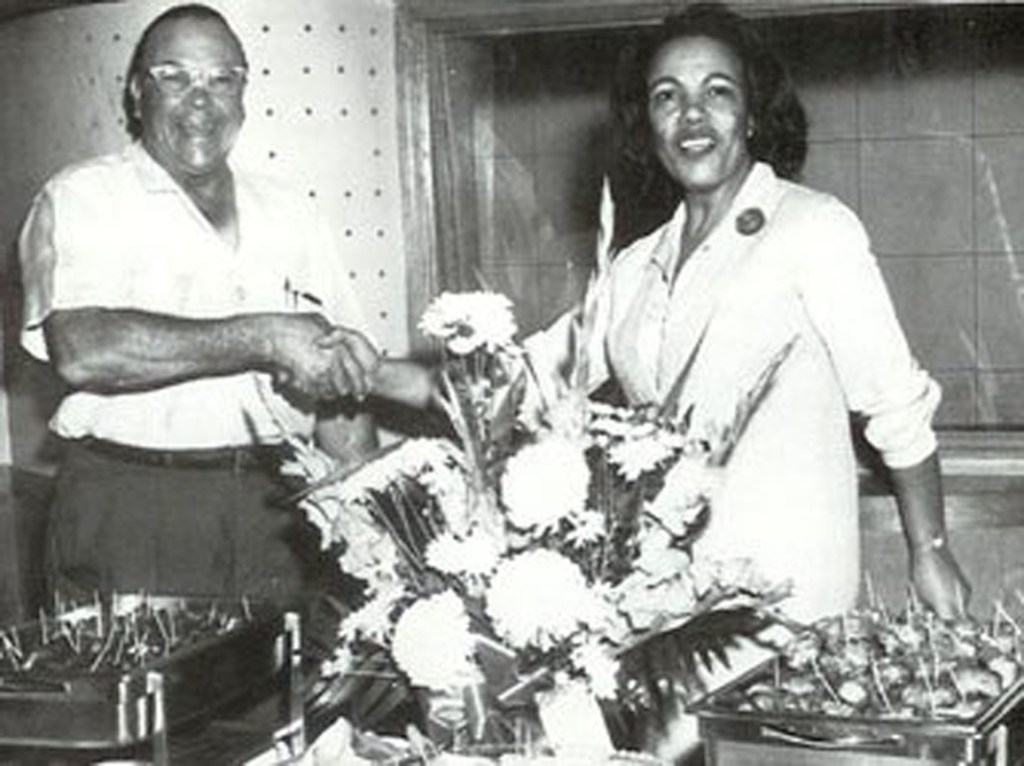
Don Robey and Evelyn Johnson
Breakdown in Biloxi? She’d figure it out and the show would go on the next night. Fellas in jail in Tuscaloosa? Evelyn to the rescue, by wire and/or telephone. While Don Robey sat back and collected almost all the profits from the records being sold, Johnson took care of his bookkeeping while making an actual living (not a killing like Robey, who was credited as a songwriter on virtually every Duke record despite being tone deaf) with her booking agency. Nobody got rich but Robey.
Duke Records had originally been started by white WDIA program director David Mattis. However, within a year Robey, who had begun his record moguling career with his Houston-based Peacock Records, managed to wrest control and inhale the whole shebang into the ever-growing Duke/Peacock empire, making it the most successful black-owned record company ever, at least until Motown came along several years later. Everyone moved to Texas, despite mostly living on the road.
It took a few years for Duke to really get going in a big way. Johnny Ace was the big star and most consistent seller early on (he died from an accidental self-inflicted gunshot wound to the noggin in 1954, leading to huge posthumous sales), but as the 50’s came to a close it was Junior Parker, then Bobby Bland that would begin making things extra-profitable for the money-hungry Robey. By the early 60’s, Duke was a powerhouse of a label, selling more records than almost all other independents. Maybe Atlantic sold more in certain years…
The difference was that Duke sold almost exclusively to blacks. If you were white it was hard to even find a Duke record, as they were stocked only in stores on the wrong side of the tracks. Had their distribution been better, there’s no telling how many of the Duke titles that scraped the regular Top 40 might have been bigger. Atlantic and Motown never had that problem. Duke was strictly a chitlin’ circuit operation, and proud of it.
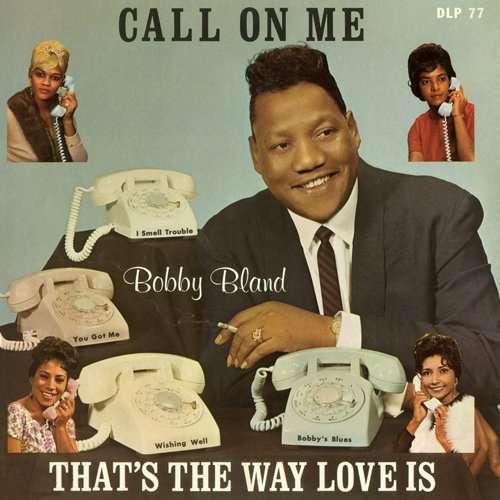
Bobby’s album covers were a hoot!
Which brings us back to Bobby “Blue” Bland. Such an unheralded and important artist. A guy that had R&B chart hits every single year from 1957 through the early 1980’s. A guy that never really crossed over to the more lucrative white audience, unlike his buddy B.B. King or some of the rawer blues artists that played guitars. A guy that, making just a half a cent per record in royalties (with all touring and recording, possibly Robey’s gardening expenses too, deducted from same), had to tour incessantly for the better part of 50 years to even pay his bills (mostly back taxes). And one of the greatest performers ever.
It’s hard to describe Bland’s style. Was it blues? Was it R&B? Was it jazz? Was it soul? Gospel? All of the above really. Bland took the blues, added Joe Scott’s jazzy, almost big band arrangements and some churchy sounding songs (nobody knows who really wrote many of ‘em despite Robey or one his pseudonyms appearing on most), and sang the shit out of ’em.
For my money “soul” music starts here. Ray Charles was R&B/jazz with gospel elements. This new-fangled blues with horns and deep gospel vocals stuff that Bland was recording (and selling!) is what led to Otis Redding and all the rest of the really good stuff. Stax. Real soul music. Motown was more pop-oriented. The Supremes? C’mon…
Bobby wasn’t a screamer. He didn’t move around on stage. He didn’t play an instrument or write songs. He wasn’t a pretty boy like Sam Cooke, nor did he pander to the crossover audience like him. He was pure soul, pure blues, pure Bobby. He exuded sepia class, and let the subtleties and dynamics of his powerful vocal cords do the rest. It’s the voice, and the demeanor, the look.
By the mid-60’s he was as big a sex symbol as existed for adult black women, especially in the south. They bought anything Bobby released and attended every show they could, always dressed to the nines. A Bobby Bland show was a major happening, a chance for the whole community (get the womenfolk, and the menfolk gotta come too) to come together outside the confines of church. Where there was booze. Maybe throw some panties at Bobby. Good times!
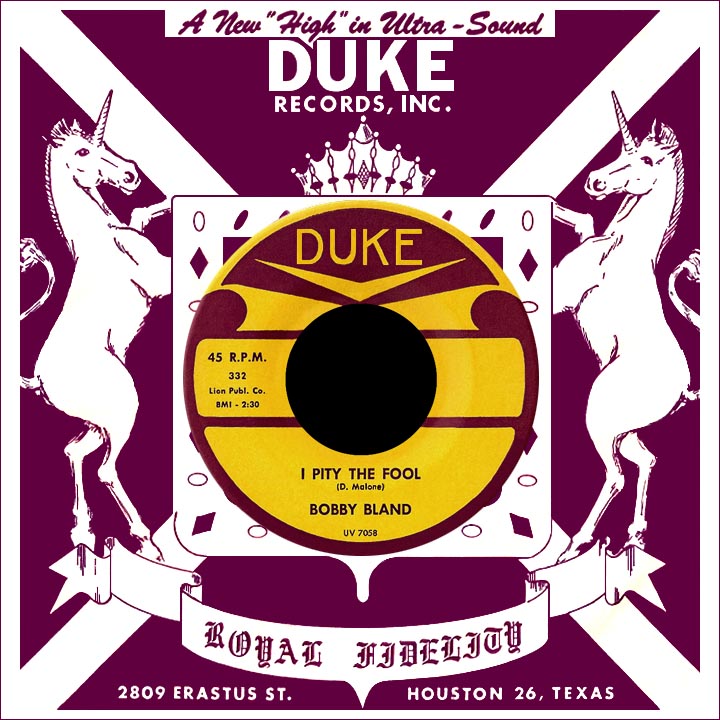
The original Duke 45′s looked pretty cool too.
Bland’s longevity was pretty amazing. He may not have ever sold huge numbers of units, but his core audience, while they were still alive anyway, was intensely loyal. Even towards the end of his life (he died in 2013 at age 83) he was playing to decent sized audiences and making fairly strong records in the old style more or less. He had a few unfortunate years during and after the disco era, some truly bizarre record covers with scantily clad white women on ’em and lots of strings behind the vocals on sappy tunes, but eventually he came to his senses and realized where his biscuits were buttered.
Duke? Well, ol’ Don Robey sold that shit off in 1973 to the ABC/Dunhill weasel factory for a cool million. A pittance, but at the time who knew that a niche market of people would come to their senses and begin to value music on musical terms? Today that catalog of songs and recordings is probably worth hundreds of times that one mill. The ABC (now MCA) weasels have certainly flooded the reissue market, almost yearly, since then.
All the better reason to ingest the best of this stuff via YouTube. The only ones that ever made any cash off this stuff were Robey and then the other, paler weasels. And before we start getting all judgmental on ol’ Don, you’ve gotta realize that, at the time, everyone was doing the screw the artist/songwriter thing. Often the songwriters wanted immediate cash, not royalties. Ka-ching! Robey was no fool…
He may have been more audacious, possibly a bit of a wise guy about it at times (he often flaunted a pistol when asked about royalties by underlings), but people who really knew him almost all say that he wasn’t a bad guy. Don Robey just liked his cash is all, and knew how the system worked. Evelyn Johnson even married the guy (according to her – no records exist), and she was revered by all.
For my money Dick Clark was a much bigger sleazeball when it came to record business shenanigans. Or the much-lauded, highly corrupt and mobbed-to-the-hilt Alan Freed. Clark was worse though, because the payola chasers let him get away with it. He was too white-bread dreamy to go down in ignominy. But that’s a story for another day…
——————————–
So, YouTube, and Bobby. Got off track there for a minute. Here’s Bobby’s first hit, a tune well known by fans of the watered-down white-boy blues. Clapton heard “further”, which really is what Bobby sings, but the label said “Farther”. Guitar on this is by Pat Hare, whose story is worthy of its own post. From a 78! Sounds awesome:
And here’s my all time fave Bobby tune. Love the guitar, which is played here by the fabulous Wayne Bennett, who was with his band for decades on and off. Here’s the classic Bobby Bland sound, lots of horns, everything fitting together nice and tight. Drummer Jabo Starks would leave shortly after this to play with James Brown on several of his seminal funk records:
Wait, I can’t close this out without foisting Bobby’s biggest hit. Maybe you know this one by way of the Grateful Dead or Them or any number of other hideous covers. The mono version heard here is the real thing. Beware the inferior stereo:
That’s all folks! This piece originally appeared on the old tumblr blog in early February of 2017. The song a day thing didn’t work to increase engagement so I’m back to just posting things as the impulse strikes. I was listening to Bobby earlier today, which reminded me of the post, which is better than I remembered. I did real research it seems!
The Evelyn Johnson part was pretty eye opening. I wonder how many other unheralded women were the real backbone of a label or something related? I know Estelle Axton at Stax was another one that gets far too little credit.
Fun fact about Estelle: after being basically forced out from Stax, she hired a local Memphis DJ, future Hollywood Squares celebrity Rick Dees, who helped get her latest musical hunch on the air in a big big way in 1976. Only people as old as me (65) will likely remember the tune, which disappeared very quickly but sold a ton regardless: “Disco Duck.”
Estelle Axton, whose hunches (and refinancing her house a few times as brother Jim played bossman) had helped build Stax in the 60s as much as anything, was right again! Well worth learning more about her. There’s a great Stax book, though the name escapes me. Robert Gordon wrote it, not the singer as far as I know. Lots of great Estelle Axton info in that one.
Until next time! BTW, if you’re reading this you may no longer exist. But thanks! Your sacrifice is appreciated, and you’ll be remembered for suddenly ceasing to exist in public, a very ridiculous way to go.
All that is my hilarious yet still quite whiny way of lamenting the lack of participation or even page views that’s happening here. It’s as if I’ve hired the opposite of a promotions person. I seem to actively repel engagement of any kind!
Story of my life… Then the ONE time I do get engaged it ends badly 13 years later. Everyone’s despised me ever since! My own family!. Fuck ’em all! That’s what I say. You just now read it! You OK?


Leave a Reply